
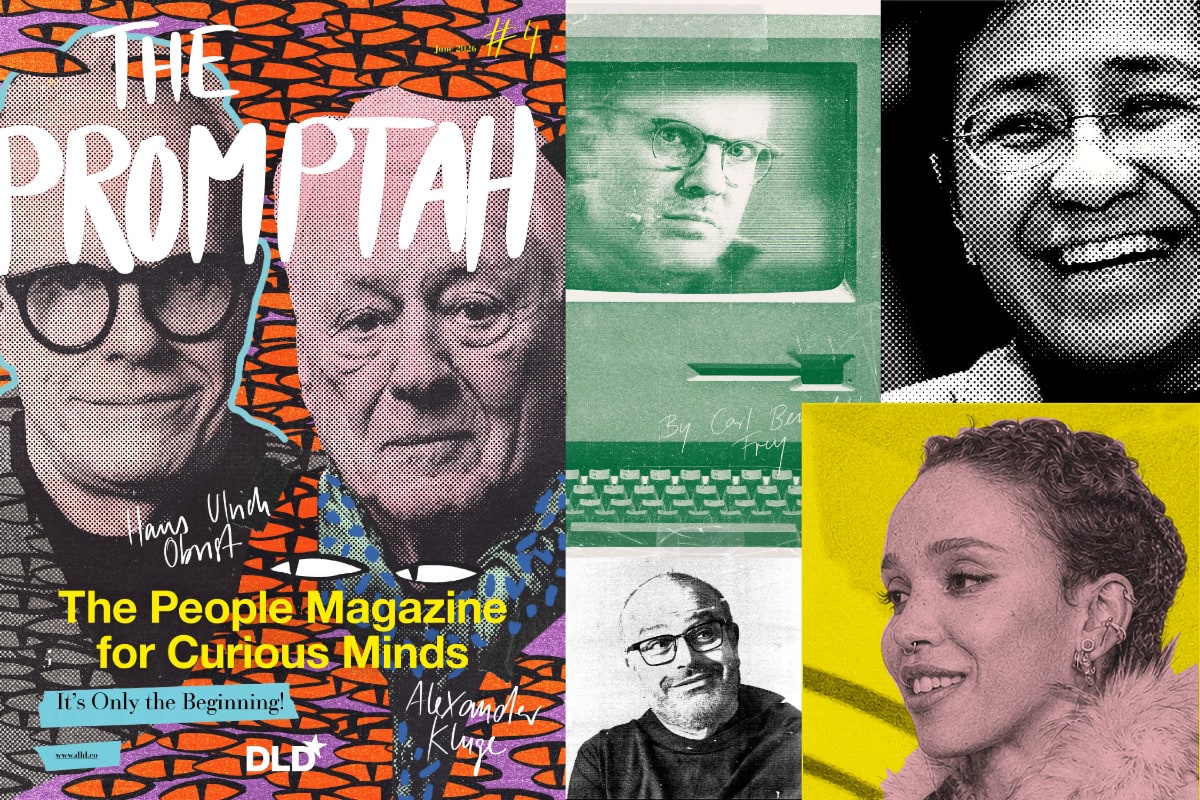
Design: Annette Jung
The Promptah No. 4: “It’s Only the Beginning!”
How to keep calm and navigate through turbulent times? Some of the world’s leading thinkers offer guidance in the fourth issue of DLD’s people magazine for curious minds.
Change at the pace of AI demands answers that go deeper than a chat with Claude and friends. Every day sees technology advancing at lightspeed while individuals, society, and organizations try to adapt. The biggest challenge? “There is no clear path, no map, no common goal”, write DLD founder Steffi Czerny and Christian Teichmann, Board member of Hubert Burda Media, in their editorial of The Promptah issue 4.
Luckily, there’s help. In interviews and essays, some of the brightest minds from business, politics, science, and culture offer fresh perspectives on how to navigate these uncharted waters. Nobel Peace Prize laureate Maria Ressa shares her thoughts on how to protect democracy from tech abuse; Oxford economist Carl Benedikt Frey explains how AI can boost productivity; Grammy-winning singer FKA twigs reflects on AI’s role in music; and Father Paolo Benanti invites readers to a thought experiment “that might unsettle you”, as he writes in his essay, “Everybody Believes. Even You.” And there’s much more, of course: see below.
The cover of The Promptah no. 4 is an hommage to the late Alexander Kluge, one of Germany’s greatest modern philosophers, who held one of his last public talks at DLD26 in January before his passing in March. In conversation with Hans Ulrich Obrist, Alexander Kluge discussed the need for a new “meteorology of thinking” – a way to read the storms and digital clouds of our era, similar to the way we read weather, so that we can orient ourselves rather than be swept away. You can watch the video here and read an exclusive interview with Kluge in The Promptah or online.
Innovation: Future Positive by Design
When everything feels too complicated and overwhelming, there’s a natural tendency to think smaller and retreat, Matthias Tschöp, the newly appointed President of LMU Munich observes. “But that would be exactly the wrong thing to do”, he argues. “When the world becomes more confusing, we do not need less ambition, but more. When truth is under attack, we do not need less science, but more.” Universities form the backbone of a free society, Tschöp emphasizes, because they are places “where the complexity of the world is not explained away, but understood” – demanding an open mind and a willingness to tolerate conflicting views.
Carl Benedikt Frey is one of the world’s leading experts on studying the future of work. In his Promptah essay, he examines the seemingly strange fact that AI has not yet boosted productivity and cautions that agentic AI could “create real damage at machine speed” if the technology is not properly designed and implemented. What will be key to delivering real benefits of AI to both society and businesses is building a verification infrastructure, Frey makes clear.
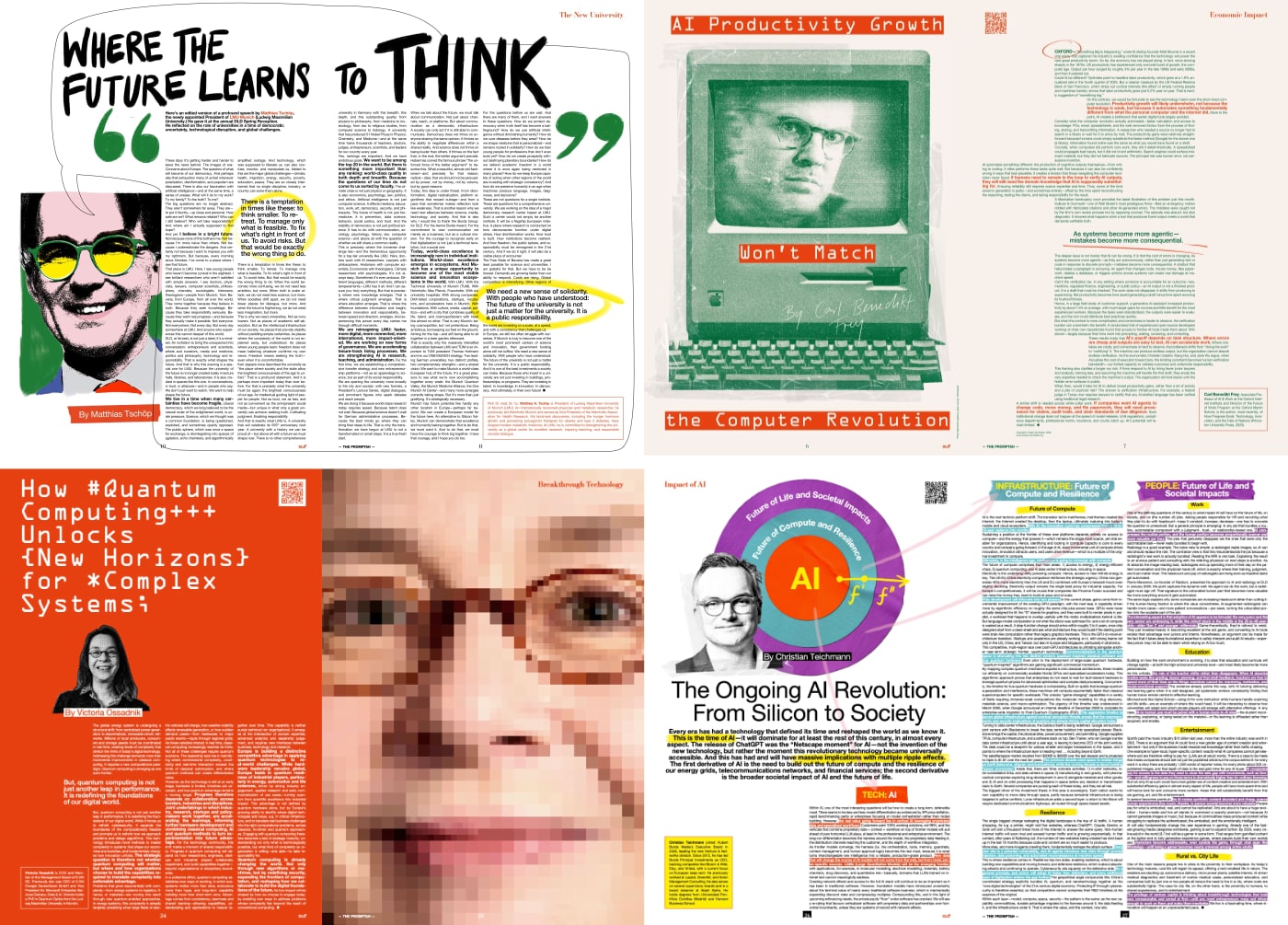
This way to the future: Get your free copy of The Promptah No. 4 for a 360-degree view on innovation.
In his deep dive “The Ongoing AI Revolution: From Silicon to Society”, Christian Teichmann describes the impact of the AI boom on various industries – from chip development to cybersecurity and entertainment. Read his text to find out how technology changes the jobs of doctors and teachers alike, and why actors might have a better chance seeking a career on stage than in Hollywood.
Victoria Ossadnik, COO and Board member of E.ON, illustrates the potential of quantum computing in the context of systems that are so complex that they require a new computing paradigm. One example: building a smart energy infrastructure, which requires a shift “from centralized power generation to decentralized, renewable‑driven networks.” Making quantum computing work will depend on “collaboration across borders, industries and disciplines”, Ossadnik writes – and could result in new ways of working “in which ecosystems matter more than silos, endurance more than hype, and long-term capability building more than short-term wins.”
Society and the Philosophy of Tech
The digital age has also become an age of polarization. This is no coincidence, several interviews and essays in the new Promptah issue make clear. Trust lies at the heart of a civil society, and it forms the basis of a stable democracy. But social media platforms have been chipping away at this foundation for years – and AI threatens to do even greater damage by automating the creation of fake news and teaching us that nothing we see or hear can be trusted anymore.
“The disciplined, demanding art of asking what deserves to be believed, and why, is
among the most urgent competencies of the AI age”, Father Paolo Benanti argues. For thousands of years, religious traditions “built elaborate systems for adjudicating exactly this question: what makes a testimony reliable? How do you distinguish revelation from manipulation?” Today, this decision often comes down to the individual. In that sense, “we are all believers”, the Italian priest – an expert in ethics and technologies – concludes. “The question is whether we have learned to believe well.”
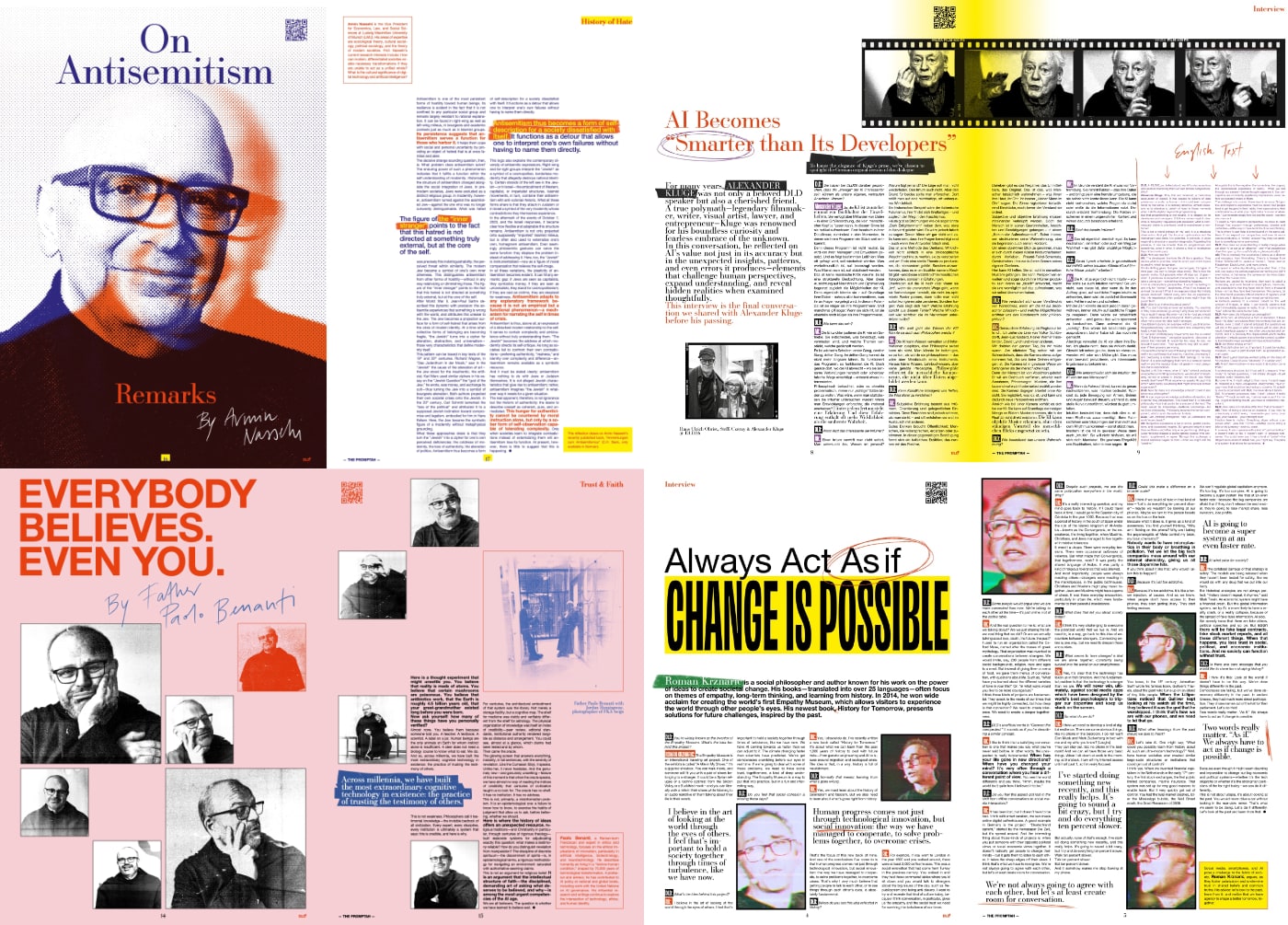
Decoding societal change: Essays and interviews from The Promptah issue 4. Download your free PDF copy here.
One way to bridge the cracks in society would be to bring people together again, offline, and let them experience the diversity of ideas and cultures outside of digital bubbles, author and social philosopher Roman Krznaric believes. In his Promptah interview he explains what we can learn from London’s coffee house culture in the year 1800, how the Empathy Museum helps visitors see the world “through the eyes of others”, and why he keeps his smartphone out of the bedroom.
As social media has fueled a recent resurgence of antisemitism, LMU professor Armin Nassehi asks what lies behind “one of the most persistent forms of hostility toward human beings” throughout history. His answer is closely connected to economic insecurity, fear of disruptive change and “a society dissatisfied with itself”, as Nassihi writes. “The Jew becomes a projection surface for a form of self-hatred that arises from the crisis of modern identity.”
Algorithms, Apathy and Engagement
If you want things to get better, don’t lean back – take action and get involved in shaping a more positive future! That’s the core message high-profile DLD speakers share in the new Promptah issue.
Nobel laureate Maria Ressa, co-founder of the Philippine news platform Rappler.com, sees 2026 as a seminal year that will decide whether democracy prevails or succumbs to populism and authoritarian forces, powered by disinformation and algorithmic manipulation on a grand scale. “The entire world order is being changed in front of our eyes”, she says. “Will you have the courage to jump in at this moment, to bring back the best of who we are as people?” Because the public information ecosystem “encourages the worst of who we are. And that is not the world I want to live in.”
Being a citizen “isn’t just about casting a vote”, Ressa emphasizes. “Being a citizen means demanding the world you want.” Taiwan offers a wonderful example of the positive effects that citizen involvement can bring, as the conversation between Audrey Tang and Zara Bruhn shows. As Taiwan’s first Digital Minister, Tang launched a Presidential Hackathon, asking people to develop solutions for common problems. The participatory approach also helped the country fight disinformation on social media platforms like TikTok and Facebook. “Throughout 2025, for the entire year, we didn’t have deepfake ads anymore in Taiwan”, Tang says. “We showed that we can quantum tunnel through the walls of disagreement and partisan fighting just by asking people what to do together.”

Living democracy: The power of digital platforms requires citizen engagement, and AI must be made safer.
Margrethe Vestager sees the dominance of a few, very influential tech companies as a huge problem that needs fixing. “Currently our news, our community, our democracy depends on social platforms from the United States and China”, the former EU Commissioner for Competition says. That’s why she’s chaperoning the Rebuild initiative – an effort to boost European alternatives to Instagram, Youtube, TikTok and other services. “We want to make sure that everyone can see: there is something else to move to”, she explains in her Promptah interview. “There needs to be something attractive out there, something that is better, with no threshold to pass.”
UC Berkeley professor Stuart Russell, a widely respected pioneer of Artificial Intelligence, also worries about disinformation and algorithmic manipulation. But his main concern is that AI might become an existential risk for humanity – due to basic flaws in the design of current systems. “When the idea of Large Language Models was first pursued, there was no consideration for safety whatsoever”, Russell says. Trained on human data, these systems “absorb and pursue human-like goals, but on their own behalf.” In tests, this has yielded alarming results, for example when AI systems choose to “stay alive and to allow the human being to die”, Russell warns. What’s urgently needed, he argues, are international cooperation on regulating this transformational technology and clear guidelines for companies. “Only governments can tell them: ‘Develop AI that is compatible with human existence. Otherwise, stop!’”
Dancing to the Tune of AI?
How do artists deal with the fact that AI systems have shown a particular talent for making music, drawing pictures and creating works of – well, art? – that is often hard to distinguish from those of humans?
“I wouldn’t write a song using Al”, Grammy winner FKA twigs tells DLD. “I’m a songwriter, and that part feels deeply personal to me and needs to stay that way.” But the artist, who was recently awarded the Aenne Burda Award 2026, is no Luddite. She values AI for helping creatives realize their artistic vision. What troubles her is a lack of rules and regulation, “especially when it comes to intellectual property and defining what’s okay and what isn’t”, she says. “Right now, we’re in a gray area. The technology exists, but the frameworks does not.”
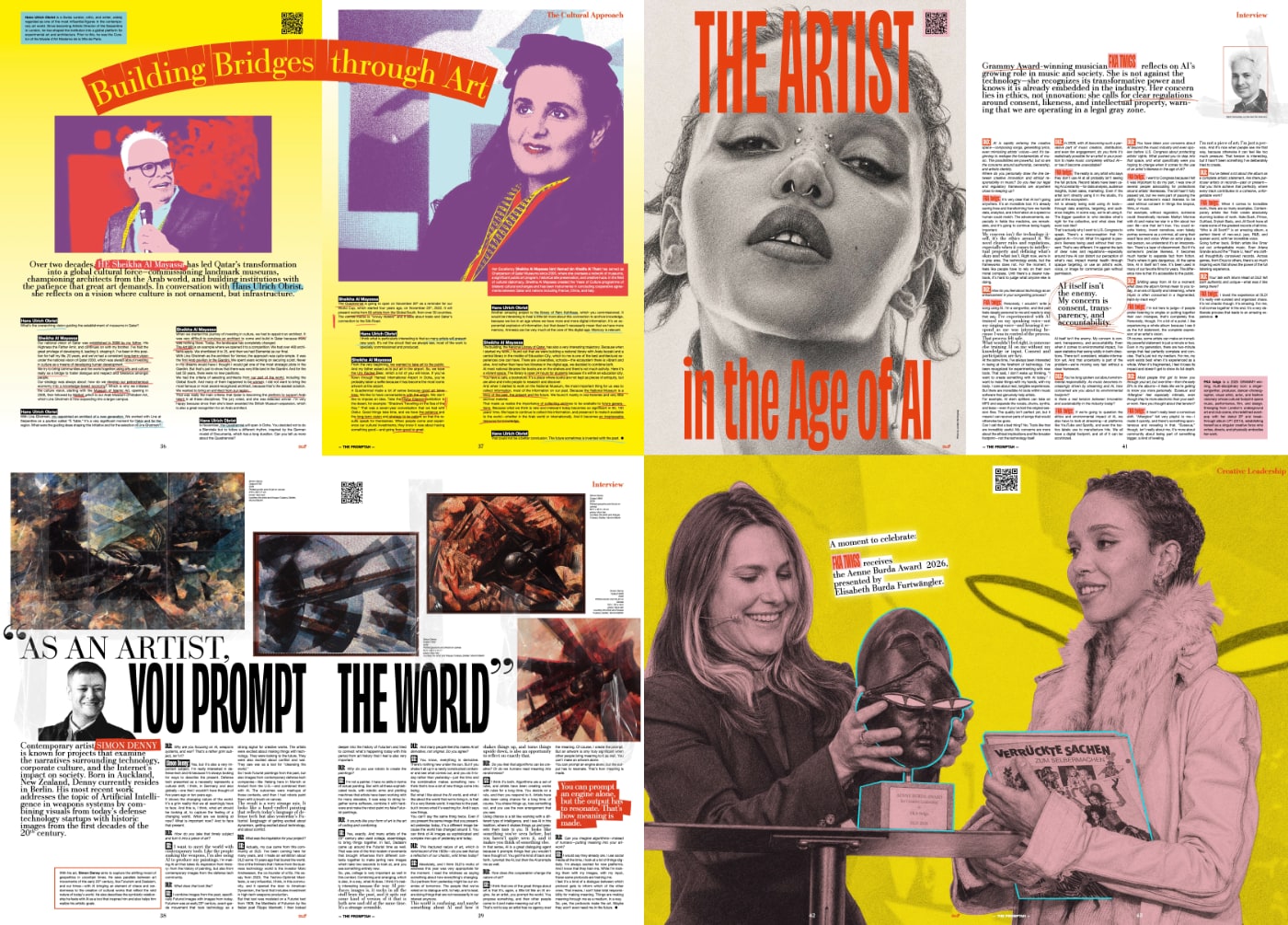
Artists and algorithms: Promptah interviews featuring Simon Denny and FKA twigs, who received the Aenne Burda Award 2026 from Elisabeth Burda Furtwängler. Plus: Hans Ulrich Obrist in conversation with Sheika Al-Mayassa.
Simon Denny actively embraces the derivative nature of AI-created content. “The way AI produces images is it sucks in all the stuff from the past, and it spits out some kind of version of it that is both new and old at the same time”, the Berlin-based artist, originally from New Zealand, says. In a recent project, he addresses the topic of Artificial Intelligence in weapons systems by combining visuals from today’s defense technology startups with historic images from the 1920s. “I want to meet the world with contemporary tools”, Denny says. “Like the people making the weapons, I’m also using AI to produce my paintings.”
Qatar has long pursued a vision of “investing in culture as a means of developing human development”, Sheikha Al-Mayassa, Chairperson of Qatar Museums, told Hans Ulrich Obrist, Artistic Director of London’s Serpentine Galleries, in a wide-ranging conversation about “Building Bridges through Art”. Download your free PDF copy of Promptah No. 4 to read this engaging exchange, and then head over to your favorite streaming service to check out “Steffi’s Essentials”, the playlist of DLD founder Steffi Czerny.
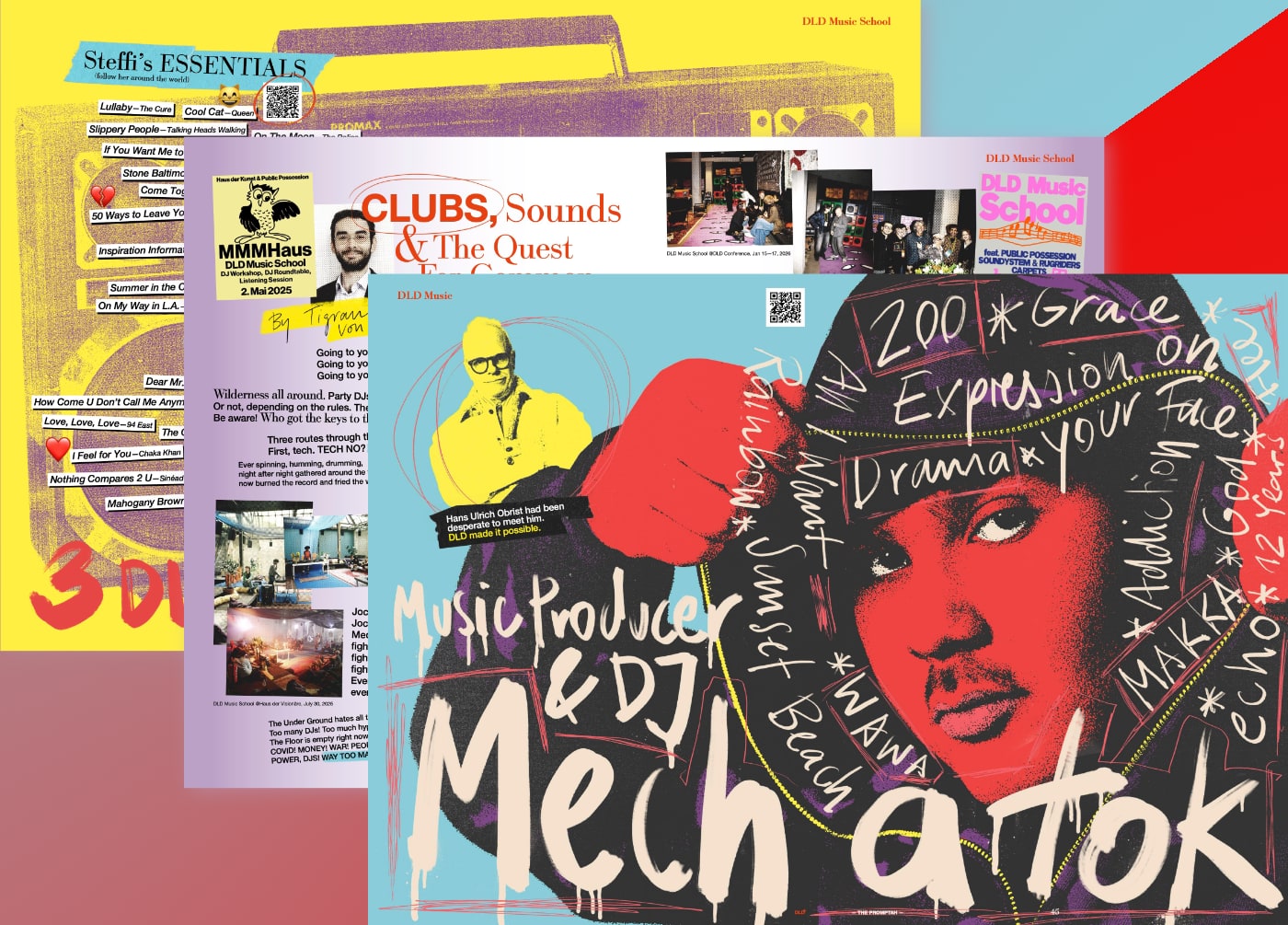
Tune in: Promptah articles featuring DJ Mechatok, the DLD Music School and Steffi’s essential playlist.
Leadership in Transformative Times
Any breakthrough technology faces skepticism, and AI is no different. Can it really deliver on its many promises? Will the trillions of dollars being invested ultimately pay off?
Many business leaders face the challenge of implementing smart algorithms into existing, often decades-old processes. “Everybody wants to use Al in enterprises around the globe, but productive usage is still limited”, SAP board member Thomas Saueressig notes. “The main obstacles are often the foundations, such as data quality and fragmented system landscapes.” Still, he says, “the opportunity is phenomenal.” Saueressig’s conversation with Axios reporter Ina Fried illustrates the opportunity, and how companies can make the most of it.
McKinsey Global Institute analysts Sven Smit and Marc Canal Noguer take this topic one step further by asking how AI and other advanced technologies can drive progress and economic growth. One key insight: “History suggests that progress does not happen by default. It emerges from a system, a ‘progress machine’ with eight interlocking parts: workers, skills, investment, innovation, energy, cities, trade, and markets.” Today, several of these traditional drivers of growth are under pressure, Canal Noguer notes, and making the most of new technologies will require “reactivating the fundamentals of growth, and upgrading the progress machine.”
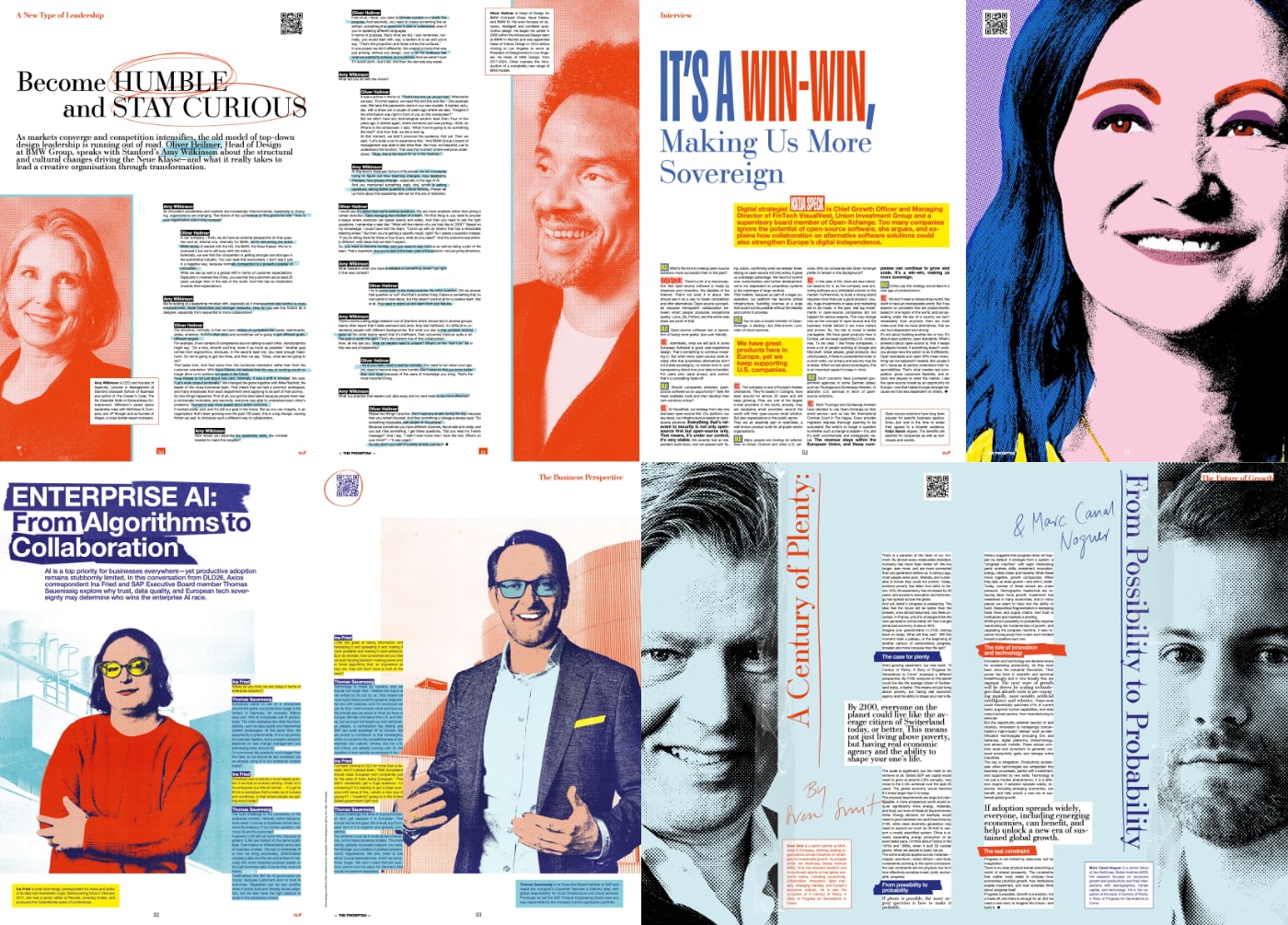
Do the numbers add up? Change can be good, if managed well, these Promptah essays and interviews show. Download your free PDF copy here.
Managing transformational change at full speed: that’s also the task of any carmaker today. BMW has successfully managed to shift from combustion engine to electric mobility by launching an entire line of EVs dubbed Neue Klasse. This required not just different engineering skills, but also a different way of thinking and collaborating across various company units, Oliver Heilmer, BMW’s Head of Design, explains in conversation with Amy Wilkinson. “Neue Klasse is not just about new cars. Internally, it was a shift in mindset”, he says. One key element was creating a common workspace that attracted the best talent from different divisions. People were more motivated and could better understand each other’s problems, Heilmer says. “That led to way more speed and a better outcome.”
Another mind shift concerns the use of foreign technology: whether it’s cloud storage or office software, many companies – particularly in Europe – have started to feel uneasy about the prospect of being entirely dependent on U.S. services they have no influence over. Open-source solutions offer an attractive alternative, as Katja Speck, business consultant and Chief Growth Officer at VisualVest, explains. “At VisualVest, our strategy from day one has been open-source first”, she says. “Everything that’s relevant to security is not only open-source first but open-source only. That means, it’s under our control, it’s very stable.” Speck also serves on the board of Open-Xchange, whose e-mail solution is now used at administrative offcies in several German states, as well as the International Criminal Court in The Hague.
Any such change requires thorough planning to be successful, Speck says. “But what’s no longer in question is whether such a change is doable.” European companies that shift from proprietary solutions to open-source do not only gain control, she argues – they also strengthen the local economy. “The revenue stays within the European Union, and these companies can continue to grow and scale. It’s a win-win, making us more sovereign.”
More from The Promptah
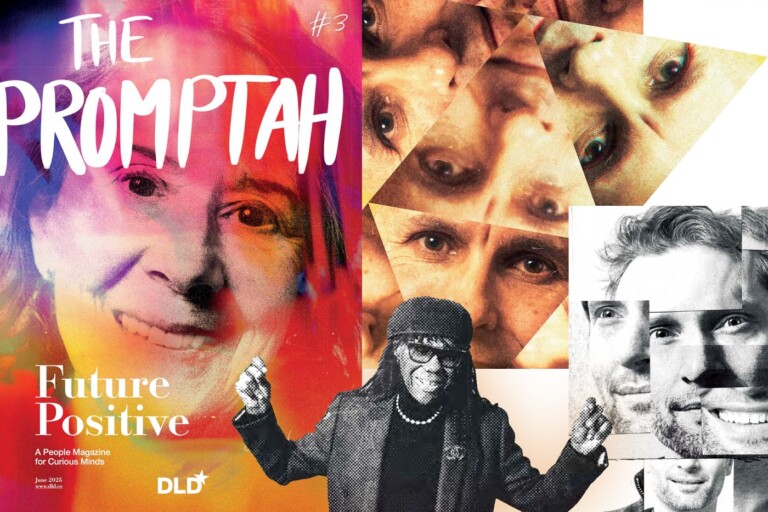
The Promptah No. 3: “Future Positive!”
In its third issue, DLD’s people magazine for curious minds highlights the rapid evolution of AI and celebrates Esther Dyson as a pioneer of using tech for good.
The Promptah No. 2: “Dare to Know!”
The second issue of DLD’s people magazine for curious minds celebrates Immanuel Kant’s 300th birthday and explores the dawn of a new age of enlightenment.
