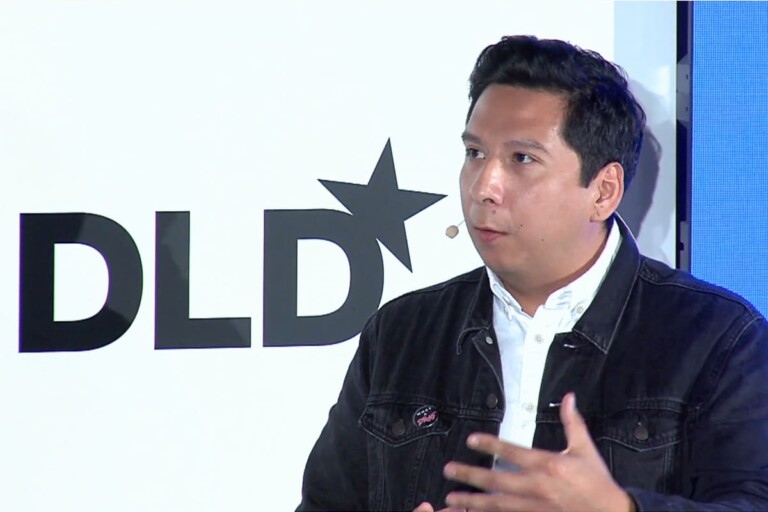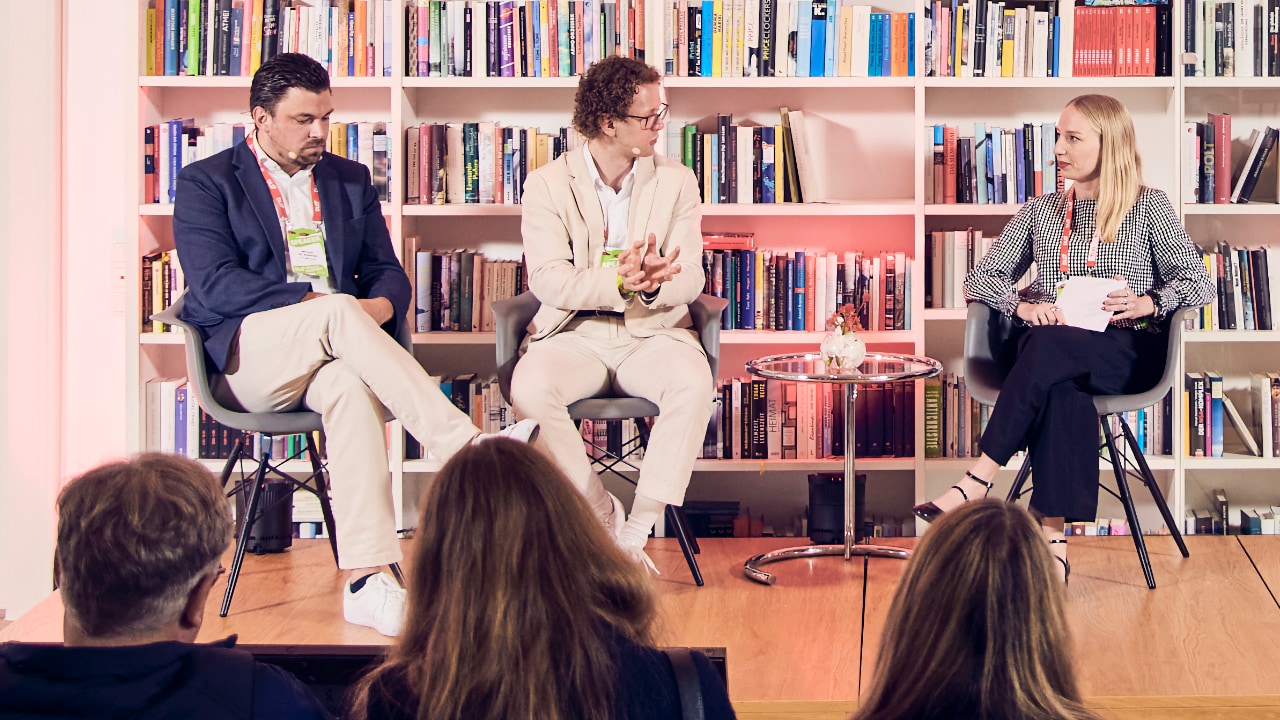
One of the most powerful things AI can to improve healthcare might simply be stripping away the paperwork, so that medicine becomes human again. That’s the provocative idea at the heart of this DLD Health session with Magnus Baringer, Founder and CEO of 321 MED, and Leonard Rinser, Founder and Director of the Venture Institute, moderated by journalist Johanna Kuroczik (Frankfurter Allgemeine Zeitung).
Healthcare spending in Germany has tripled since the 1990s, and the country faces increasing staff shortages, Kuroczik. “Already, a GP has seven minutes to spend with his patient, but does two days of office work a week”, she says. This has prompted Germany’s National Academy of Sciences, Leopoldina, to call for an exploration of the potential of AI in healthcare.
“You spend 70% to 80% of your time doing organizational work instead of actually working with the patient”, says Baringer, a hand surgeon. “However, most of these tasks do not necessarily require a human being” – making them perfect jobs for digital automation. “They require structure, context, and I would call it educated decision making”, Baringer says. “These are areas where AI can help tremendously if it’s applied correctly.”
Leonard Rinser highlights AI’s potential in making health data actionable and guiding people “to make more informed decisions at the right time to stay healthy.” This starts with smart watches and fitness trackers collecting data over time, allowing AI to spot potential health issues early through pattern detection, he says.
Watch the video to explore this session in detail.