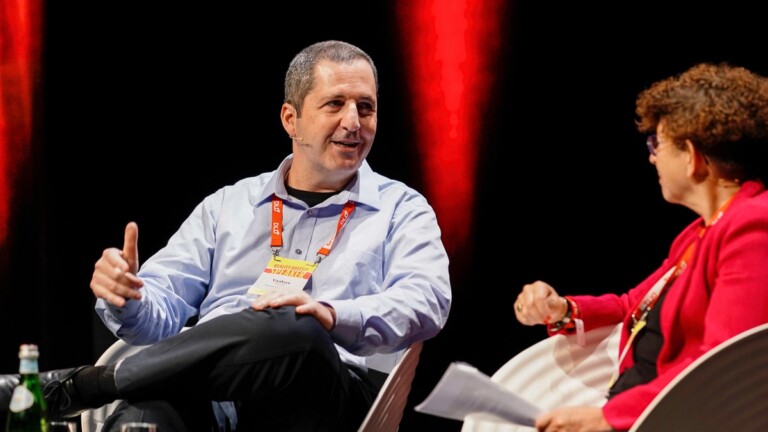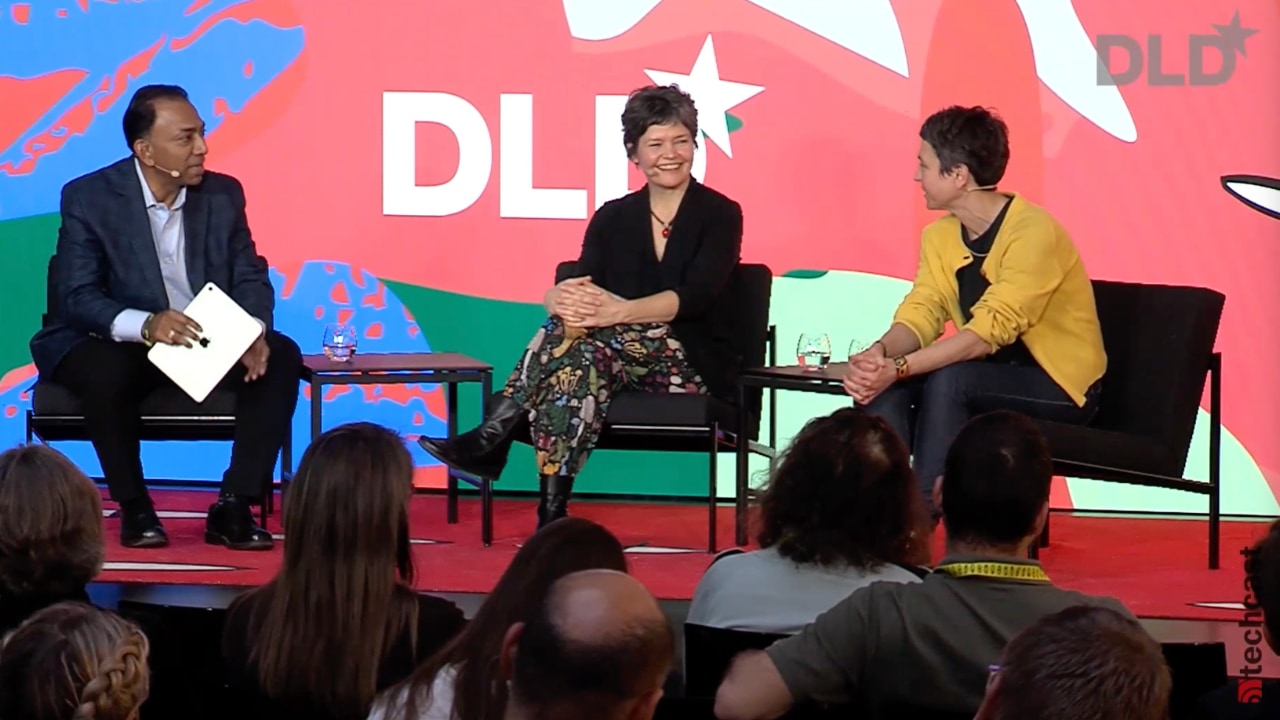
Endless growth cannot be the goal for humanity – for a prosperous future, look to the doughnut instead: as a symbol of a sustainable, circular economy. That’s the core message of this DLD26 conversation between Oxford economist Kate Raworth and investor Marie Ekeland, moderated by journalist Vijay Vaitheeswaran (The Economist).
Raworth, inventor of the Doughnut Economics concept, explains that the inner hole of the doughnut represents people falling short on life’s essentials, while the outer crust represents ecological boundaries. The goal for a 21st-century economy is simple, she explains: “Leave no one in the hole, don’t overshoot Earth’s limits.”
Growth in the 20th century helped reduce poverty, she acknowledges but “simultaneously, it’s been pushing us over those planetary boundaries”, Raworth says. “We need a new design. We need businesses that are regenerative by design.”
Ekeland explains how her 2050 fund aims to “craft a fertile future” by aligning business interests with those of people and planet. “We never talk about degrowth or impact”, she emphasizes, as eco-friendly startups like Paebble should be seen as a “huge economic opportunity on top of being really great for the planet.”
Watch the video to explore this session in detail.