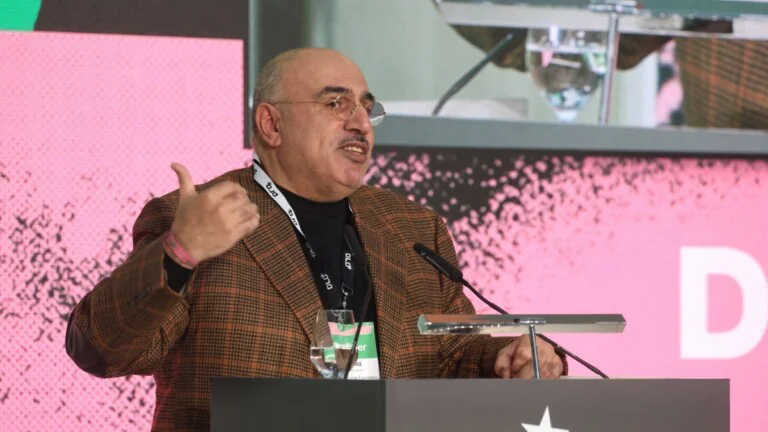
This vibrant DLD26 discussion about Europe’s role in global science and innovation features Patrick Cramer, President of the Max Planck Society, as the optimist, and Clemens Fuest, President of the IFO Institute, as the skeptic – or “doomer.”
Moderated in the style of a TV debate by journalist Dasha Burns of Politico, the conversation centers on Europe’s struggle to transform its scientific excellence into global technological leadership.
Cramer emphasizes Europe’s role as a talent magnet and a hub for collaboration. “We are free, we are open, we are diverse, we are attractive”, he states. “People want to talk to us”, he adds, pointing to potential partners in Asia and South America.
Cramer also underscores successes like BioNTech’s mRNA vaccine but notes the challenge of scaling innovations, which often comes down to limited funding.
Fuest, by contrast, points out that no globally impactful companies have emerged from Europe in decades. One big factor is Europe’s “tendency to protect the existing employment, existing companies, things we have”, he says.
“If you don’t take risks, you don’t innovate”, Fuest emphasizes, urging reforms in labor market flexibility, internal markets, and capital systems to foster competitiveness.
The debate also touches on Europe’s climate leadership. While Fuest dismisses the notion that reducing emissions will spark economic growth, Cramer sees opportunities in renewable energy and decentralized solutions.
“If you look at China, what they did over the last 20 years is, they surpassed everyone by electrifying industry”, he notes. “So what we have to do is we have to provide much more electricity than we have now.”