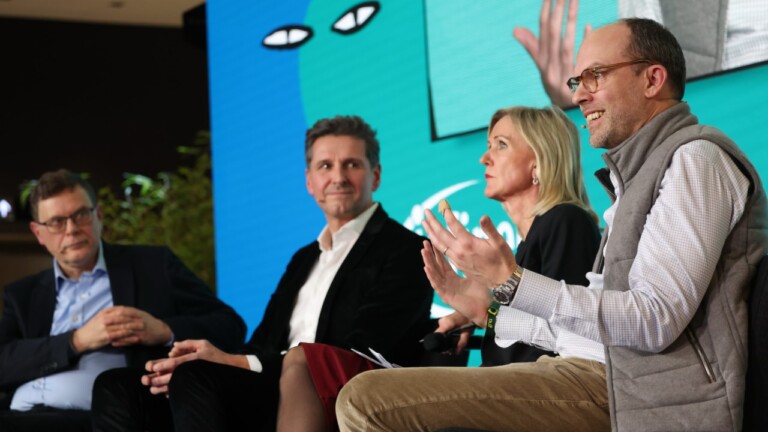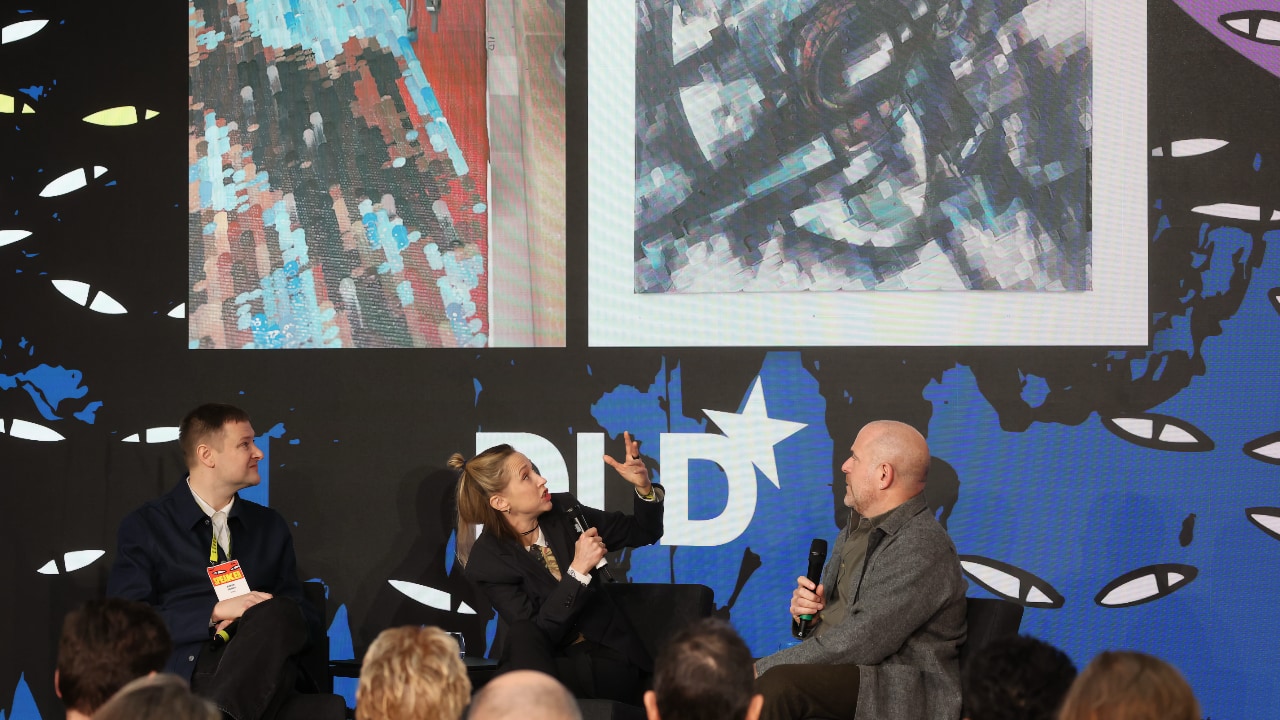
Is AI slop really a threat to art, culture, and creativity – or could it be a blessing in disguise? This DLD26 session with cultural strategist Marc Spiegler, artist Simon Denny and writer Caroline Busta presents two different scenarios: an optimistic and a pessimistic one.
In the optimistic scenario, the endless barrage of AI-generated junk might actually revitalize live culture by driving the exhausted public back to real-world experiences like theater and dinner parties. “There’s an example of this in the dating world”, Spiegler nottes, where people “have gotten so sick of dating apps that now they’re joining running clubs because they actually want to see people in person.”
In the pessimistic version, the sludge wins: attention spans collapse, reading declines, and all that matters is how much dopamine our screens can deliver.
Both Busta and Denny prefer the optimistic scenario. Denny, whose work fuses AI outputs with Italian futurist painting and defense-tech imagery, treats slop as raw material. “I think AI is a language to address the present through the past”, he says. “It fractures linear time.”
Caroline Busta points out that humans have always adapted to new technologies. “I definitely think we’re becoming a new kind of human”, she says. “And I imagine our children will be at the forefront of whatever that new human is.”
Watch the video to explore this session in detail.