
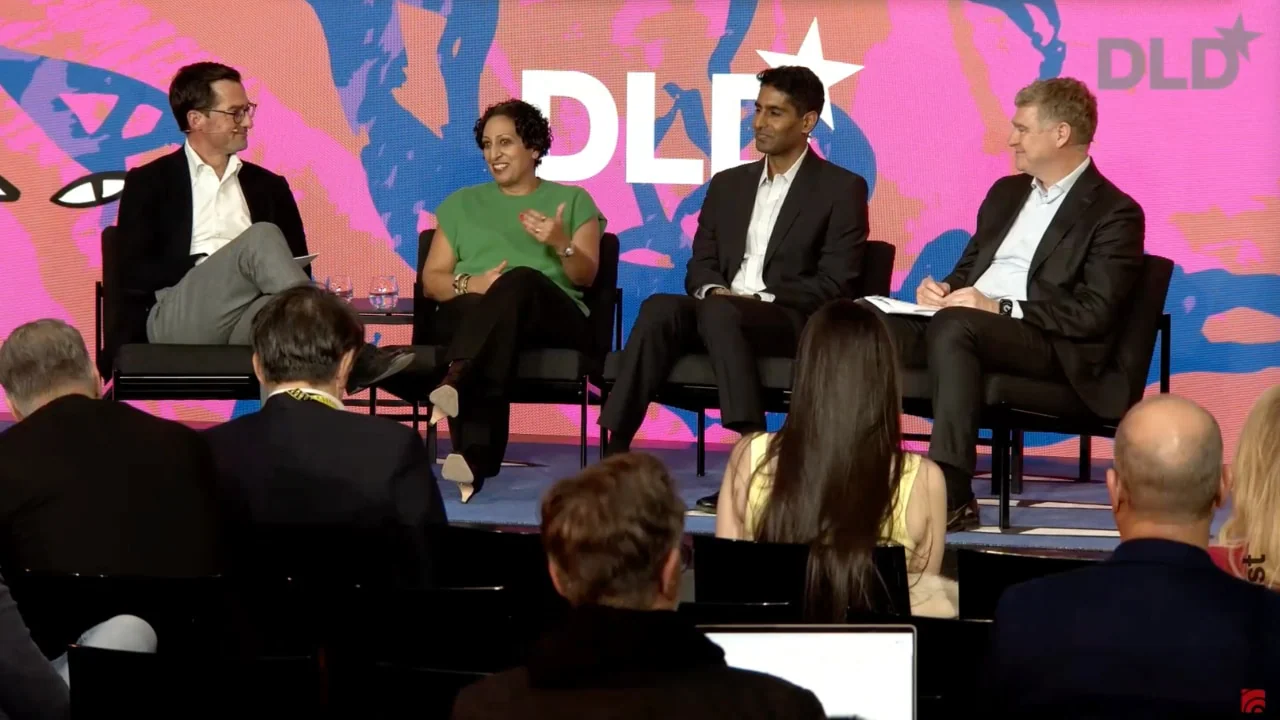
Yes, AI is reshaping the labor market – but not necessarily the way you might expect. Moderated by Maximilian Preisser (Hubert Burda Media), this DLD26 session with Nina Zimmermann (Kununu), Bharat Chandar (Stanford Digital Economy Lab), and Mario Nava (European Commission) highlights the impact of Artificial Intelligence on the future of work.
Chandar presents findings from Stanford research based on millions of U.S. payroll records: entry-level workers in AI-exposed occupations – such as software development, customer service, and administrative roles – are already experiencing a hiring slowdown. This is not true of positions requiring more experience, he notes.
Zimmermann highlights AI’s role in automating repetitive tasks, particularly in logistics and administrative work. “There’s a positive signal there”, she says, as adoption tends to correlate “with efficiency and productivity. You don’t see it so much associated with job cuts.”
She urged business leaders to be transparent and communicate clearly how AI will augment human workers, rather than replace them. “You’ll see many, many roles change”, Zimmermann says. “It’s all about embracing it.”
Mario Nava calls for policies that prioritize upskilling and reskilling. “The AI that we have today is not the AI of three years ago”, he emphasizes, “and it’s certainly not the AI a couple of years from now.”
Watch the video for further insights.


