
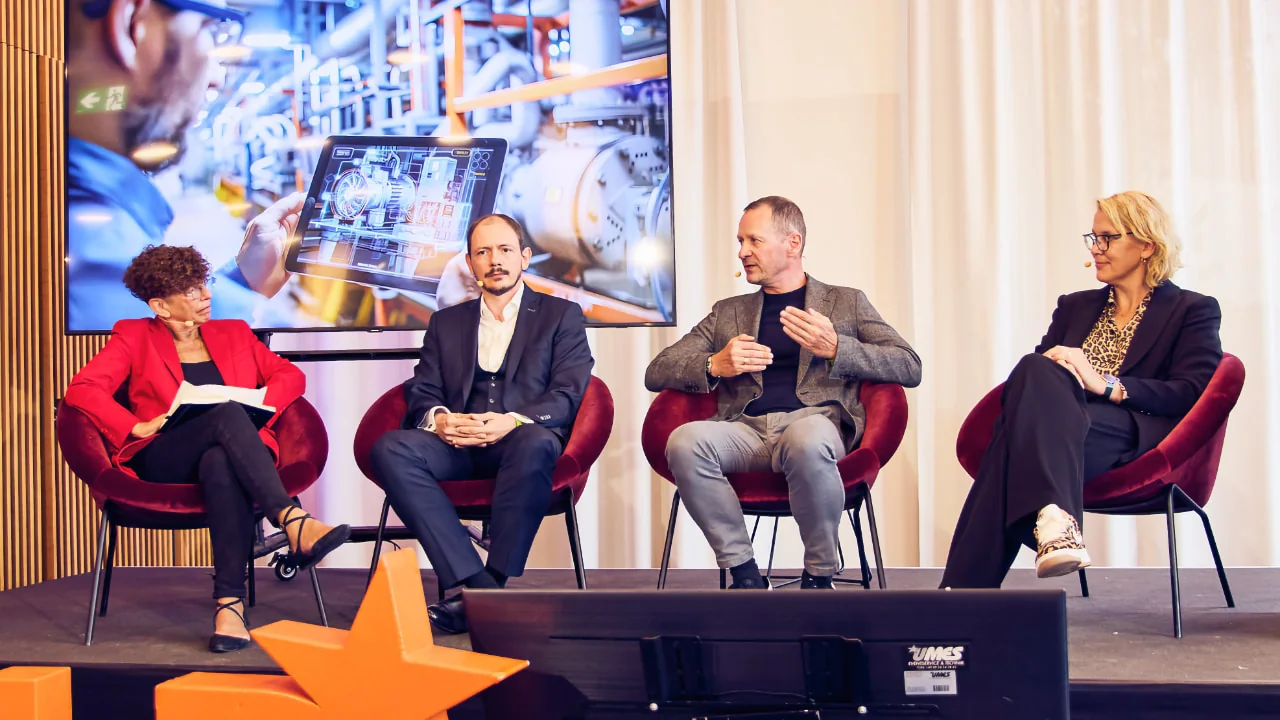
The transformation of industrial production through AI isn’t about replacing humans; it’s about creating productive collaboration between machine intelligence and human expertise, as you’ll hear in this DLD Future Hub session, moderated by Jennifer Schenker, which brings together Sicco Lehmann-Brauns (Siemens), Kerstin Schlögl-Flierl and Markus Sause (both from the University of Augsburg).
The discussion highlights the potential of AI to enhance human capabilities, but also stresses the importance of embedding ethics, fostering trust, and designing for human agency.
Ethical computing “should be good for people, good for the world”, Kerstin Schlögl-Flierl says, emphasizing the importance of building trust through transparency and education. She also warns against “automation bias”, where workers may blindly trust AI, and calls for improved AI literacy to empower people to question and challenge machine decisions.
Sicco Lehmann-Brauns describes the shift from physical to cognitive labor in factories, which requires frameworks that balance AI’s capabilities with human expertise. “The big question is how to actually organize this collaboration”, he says, “and how to make sure that all the knowledge that the humans have is [properly transferred] to the AI systems.”
Markus Sause describes the University of Augsburg’s groundbreaking efforts to integrate AI into real-world factory environments, including a 5,000-square-meter shop floor. The key element is not to “confront the workers with that new technology” but rather educate them and bring them along, Sause stresses. “This needs to be designed from the beginning with a positive perspective of the human.”
Watch the video for further insights into the new age of AI in industry.


