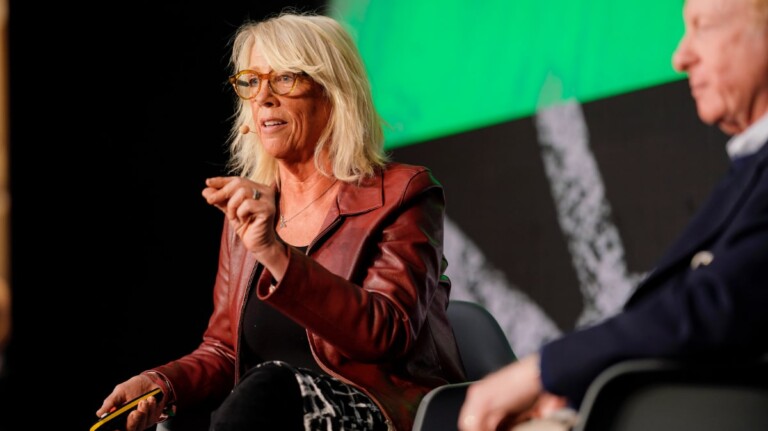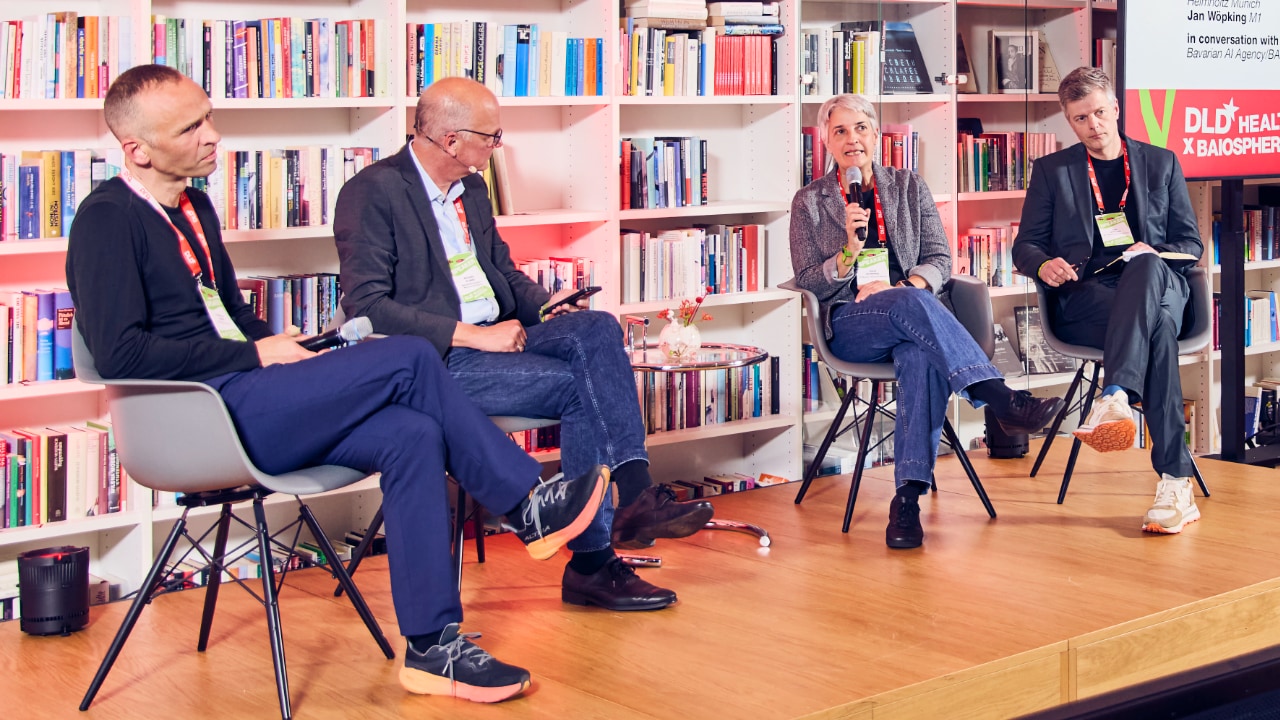
Medical AI matters only when it moves from research into clinical use through shared data, cross-institution work and tools that bring clear benefits to patients, this DLD Health expert panel, moderated by Michael Klimke (BAIOSPHERE), makes clear.
Julia Schnabel (TUM/Helmholtz Munich) describes the field’s current transformation, in which images are no longer treated as static, isolated data points but as part of a patient’s individual health journey within a broader context. “The most exciting bit is that everything is starting to come together”, she says.
Carsten Marr (Helmholtz Munich/LMU) outlines three opportunities for AI in healthcare: mirroring what humans do but “quicker, more standardized and ideally cheaper.” Secondly, surpassing human capabilities in certain tasks. And thirdly, bringing expert knowledge and medical care to “low-resource settings”.
Jan Wöpking (M1) represents the Munich Medicine Alliance, a public foundation whose ambition is to turn Munich into “one of the globally leading biomedical and biotech hubs in the world”, he says. One of M1’s aims is to create a Munich Clinical Data Center and a Clinical Trial Center that make data and trials accessible to clinicians, researchers, and industry partners.
Watch the video to explore this session in detail.