
The future of AI may rely on an entirely different concept of computing – one that employs optical signals rather than electric impulses.
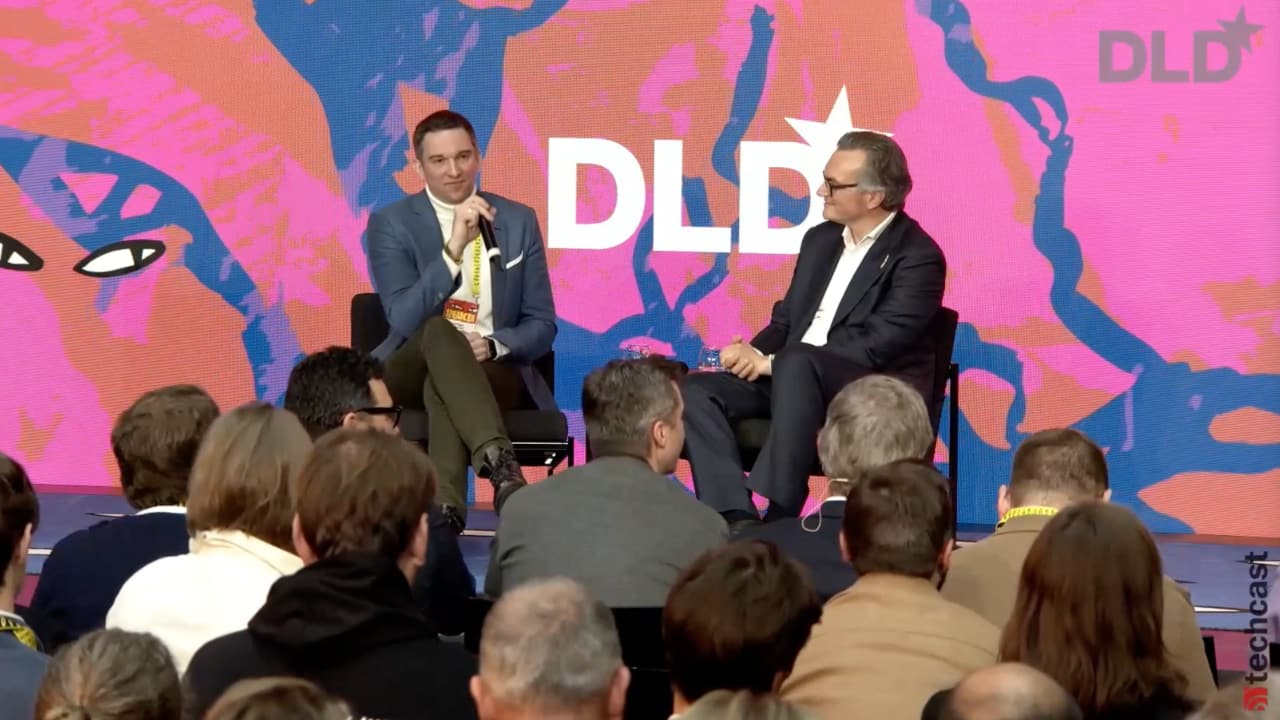
In their DLD26 conversation, Michael Förtsch, founder of Q.ANT, and Christian Teichmann (Burda Principal Investments) explore the exciting opportunities of photonic processors – and why they represent a once-in-a-generation opportunity for European technological sovereignty.
With current technology, generating a single AI action figure image takes 10 seconds and consumes roughly 20 watts – requiring the “energy of a small city” for the millions of pictures being generated each day, Förtsch points out.
The problem, he argues, is fundamental: CMOS chip technology, which has dominated since the 1970s, is hitting physical limits. “The performance does no longer grow”, Förtsch says. “The only thing that grows effectively is the size of the chips.”
His answer: shift from electricity to light. Unlike digital circuits that rely on zeros and ones, light computes in waves. This brings significant efficiency gains. Q.ANT’s photonic AI accelerator consumes just 40 watts, making it “30 times more energy efficient just because we replaced electricity for light”, Förtsch explains.
This technology also offers a path to European autonomy, the Q.ANT founder argues. “All our chips are produced in Europe” by repurposing older foundries that do not require ultra-small 3-nanometer nodes, Förtsch says.
If Europe wants true sovereignty, he adds, “we have to think it from the core, from the bottom to the top”, rather than relying on U.S. intellectual property and Taiwanese production facilities.


