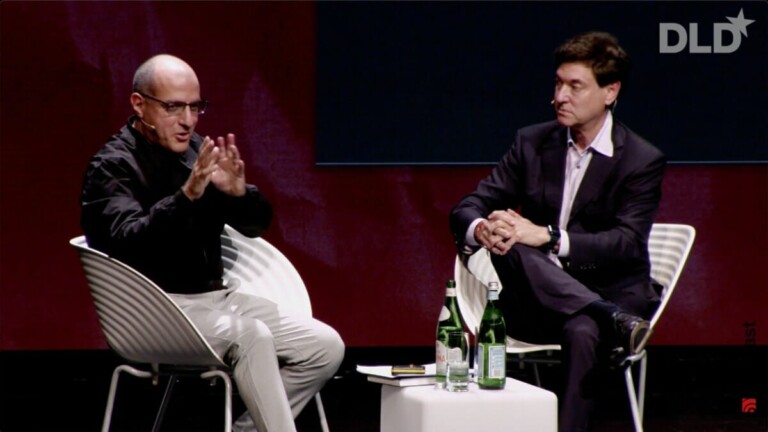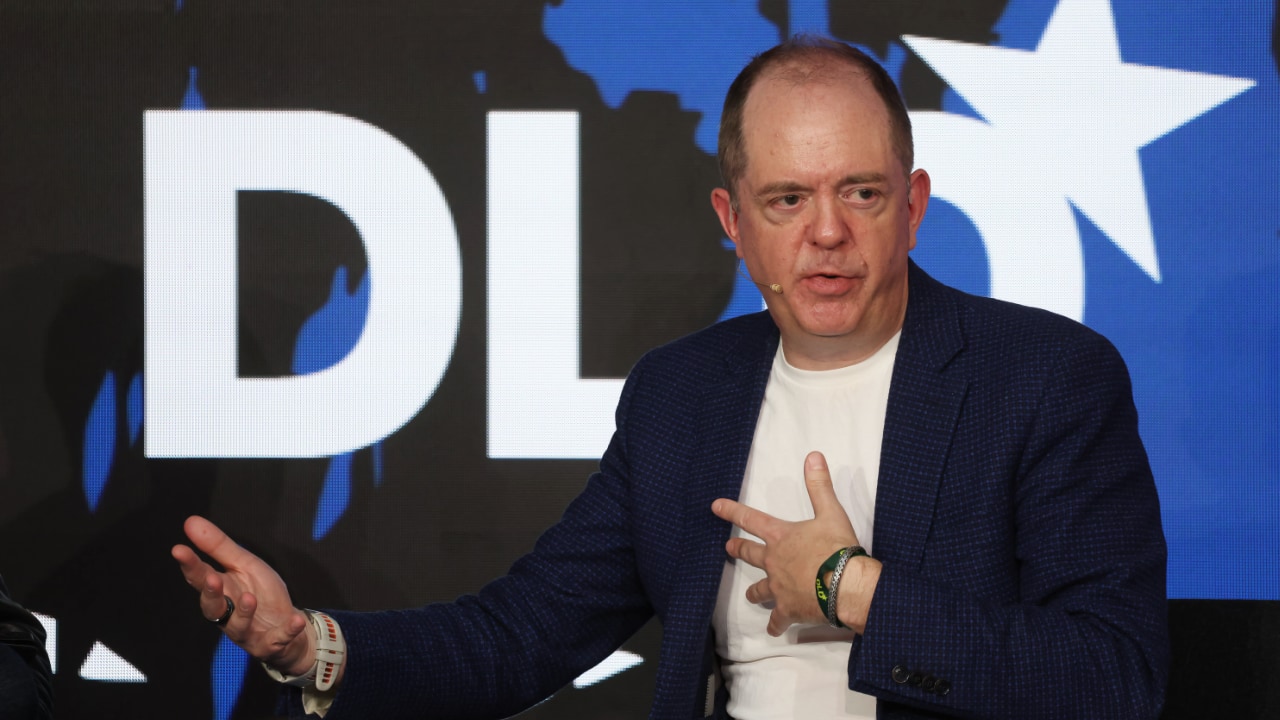
Can neurosymbolic AI solve the technology’s trust issue? That’s the question at the core of this DLD26 conversation between UnlikelyAI founder William Tunstall-Pedoe and journalist Mike Butcher (Pathfounders).
Current large language models (LLMs) operate as “a statistical guess”, Tunstall-Pedoe, who developed the core technology that eventually became Amazon’s Alexa, explains. Technological constraints mean that these models cannot get to 100% accuracy, he notes. “At some point it plateaus off.”
By contrast, traditional software applications like spreadsheets offer accuracy and transparency into how the algorithm works – but the tradeoff is a lack of flexibility. “It can tell you exactly what it did”, Tunstall-Pedoe says. “But it can’t solve actual language. It can’t tell you what’s in an image.”
To bridge this gap, Unlikely AI blends the natural language capabilities of LLMs (the “neuro”) with the 100% accuracy and transparency of traditional algorithmic software (the “symbolic”). “It’s really difficult technology, and it blends LLMs with our proprietary tech to create that sort of full explainability and really high accuracy”, Tunstall-Pedoe says.
Watch the video to explore this conversation in detail.