
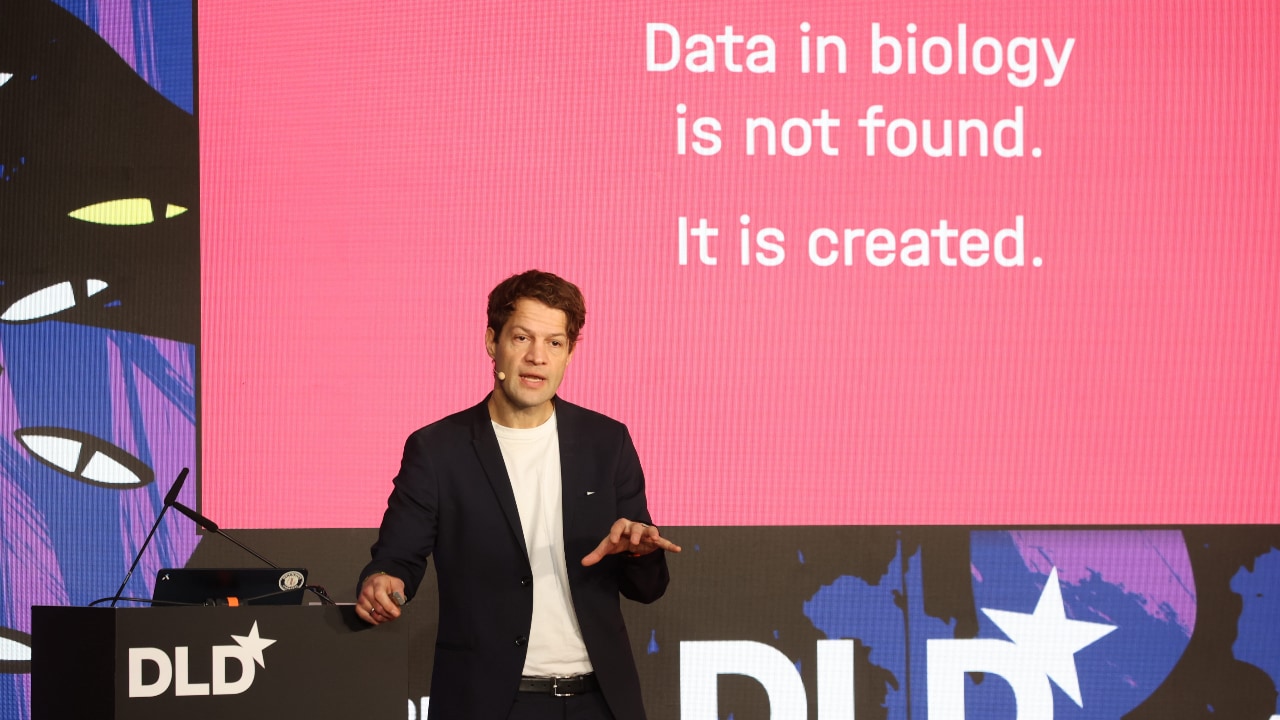
In his insightful DLD26 talk, Fabian Theis (Technical University of Munich and Director of the Helmholtz AI Center) explains how AI is helping scientists tackle some of the most complex and chronic diseases, such as cardiovascular conditions, diabetes, and neurological disorders.
While AI models are becoming more accurate, the real challenge lies in designing impactful experiments and generating optimal biological data for these models, Theis argues. “Biology is not data-limited”, he says. “It’s decision-limited, in the sense that we need to think properly about what the best data is that we need to feed to our AI model.”
A key innovation is the concept of “closed-loop active learning”, where AI not only analyzes data but also suggests the next experiments to run, optimizing drug development and reducing costs.
Theis describes his lab’s work on virtual cell models and combinatorial therapies, such as engineering dendritic cells to target cancer, showcasing AI’s potential to accelerate breakthroughs.
Watch the video to explore this session in detail.


